
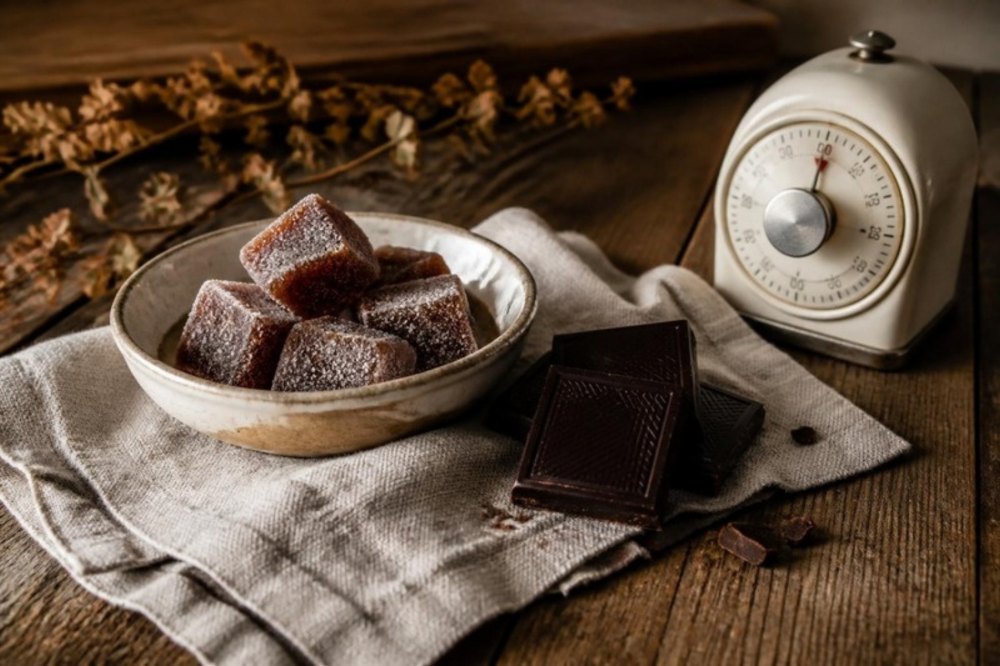
Quick answer: Most edibles take 30 to 90 minutes to kick in, and on a full stomach it can take 2 hours or more. Effects usually peak 2 to 3 hours after eating and fade over 4 to 12 hours, depending on dose. Maine requires every edible label to warn that effects can take up to 4 hours, so wait at least 2 hours before taking more.
Here's what nobody tells you before your first gummy: the waiting is the hard part. Smoke a joint and you know where you stand in minutes. Eat a 5 mg chocolate square and you get a long, quiet stretch, followed by the growing suspicion that you bought a dud.
You didn't. Your body is just busy.
How long do edibles take to kick in?
For most adults, an edible starts to register 30 to 90 minutes after eating it, and 2 hours isn't unusual. In a 2020 Johns Hopkins study led by Nicolas Schlienz and Ryan Vandrey, infrequent users ate brownies containing 10, 25 or 50 mg of THC. At every dose, effects didn't appear until 30 to 60 minutes in, and they peaked between 1.5 and 3 hours.
Franjo Grotenhermen's 2003 review of cannabinoid pharmacokinetics agrees. Health Canada stretches the window slightly: 30 minutes to 2 hours for onset, up to 4 hours for full effects. That 4-hour figure is why Maine's Office of Cannabis Policy requires an onset warning on every edible package.
Why do edibles take longer than smoking?
THC from an edible has to pass through your digestive system and your liver before it reaches your brain. Smoke goes from lungs to bloodstream almost immediately. A gummy gets broken down in your stomach, absorbed in your small intestine, then sent to your liver, which processes a big share of it first.
That liver step is called first-pass metabolism, and it's hard on efficiency. A 1980 study by Ohlsson and colleagues, using THC baked into a chocolate cookie, estimated that only about 6 percent reached the bloodstream intact. Marilyn Huestis, writing from the National Institute on Drug Abuse in 2007, described oral absorption as slow and erratic.
What is 11-hydroxy-THC?
It's the compound your liver turns THC into, and it's psychoactive in its own right. Huestis notes that blood levels of 11-hydroxy-THC run much higher after eating cannabis than after smoking it. Exactly how much it adds to the heavier feeling people describe after edibles is still debated. Either way, milligrams eaten and milligrams smoked aren't interchangeable.
What does the edible timeline look like?
This is a typical pattern for one 5 to 10 mg serving eaten by an adult with low tolerance. Your clock may run faster or slower.
| Time after eating | What's usually happening | What to do |
|---|---|---|
| 0 to 30 minutes | Digestion. Most people feel nothing yet. | Have a light snack and set a timer. |
| 30 to 90 minutes | Onset. First effects are often subtle: warmth, a lighter mood, things getting funnier. | Don't take more. This is the classic redosing trap. |
| 2 to 3 hours | Peak. Effects reach full strength. | Stay put, drink water, skip the drive. |
| 3 to 8 hours | The tail. Effects taper gradually. Bigger doses stretch this out. | Only now consider a small top-up, if you really want one. |
| Next morning | Some people feel groggy or slow. Health Canada says residual effects can last up to 24 hours. | Take an easy morning and don't drive until you feel fully clear. |
How long do edibles last?
Most edibles last 4 to 8 hours, and up to 12 hours at higher doses. Grotenhermen's review has smoked cannabis tapering within 2 to 3 hours, so the comparison is roughly a workday versus a movie. If you eat a gummy at 9pm on a Sunday, Monday morning is part of the plan.
Do gummies, chocolates and hard candies kick in at different speeds?
Slightly, though less than packaging suggests. Anything you chew and swallow takes the same gut and liver route. Format mostly changes how fast it breaks down and whether a little THC gets absorbed through the lining of your mouth first.
| Edible type | Typical onset | Why |
|---|---|---|
| Gummy | 30 to 90 minutes | Chewed and swallowed fast, so nearly all of it takes the digestive route. |
| Chocolate | 30 to 90 minutes | THC dissolves well in cocoa butter. Letting it melt may allow a bit of absorption in the mouth. |
| Hard candy or lozenge | 20 to 60 minutes for first hints | Dissolves slowly, so some THC may pass through the cheek and under the tongue. Most still gets swallowed. |
| Baked good | 45 to 120 minutes | Dense, fatty and often a bigger portion, so digestion is slower. |
| Capsule | 45 to 120 minutes | Dissolves in the stomach first. In a 2017 study of prescription THC capsules by Oh and colleagues, fasted peak blood levels came at about 1.7 hours. |
| THC drink | Often 15 to 45 minutes | Liquids leave the stomach faster. See how long THC drinks take to kick in. |
Take the hard candy row with a grain of salt: we haven't found a controlled study on THC candy specifically, and anyone quoting a precise number is guessing.
Does eating food first change how fast an edible hits?
Food usually delays an edible but can make it stronger. A full stomach slows the trip to your small intestine, and fat helps THC get absorbed. When Oh and colleagues gave volunteers THC capsules with a high-fat meal, peak blood levels arrived around 5.6 hours after dosing instead of 1.7, and total exposure more than doubled.
A gummy isn't a prescription capsule, but the direction holds: heavy dinner, later and possibly bigger arrival. Our usual suggestion is a light snack with a little fat, like toast with peanut butter.
Why did the same edible hit differently on different days?
Because the gummy stayed the same and you didn't. Even in the Johns Hopkins brownie work, blood THC levels varied widely between people on the same 10 mg dose. The usual day-to-day suspects:
-
Stomach contents. A late lunch versus a big dinner can move onset by an hour or more.
-
Sleep. Customers often tell us the same dose feels heavier when they're run down.
-
Alcohol. Mixing the two stacks effects unpredictably. Health Canada advises against it, and so do we.
-
Tolerance. Daily use raises it. If your usual dose has gone quiet, read up on taking a tolerance break.
-
The product. Brownies made with homemade cannabutter can vary from corner to center in a way lab-tested retail edibles shouldn't.
Genetics likely plays a part too. Research suggests the liver enzymes that process THC, CYP2C9 in particular, vary between people, which may explain why two friends can split a chocolate bar and have very different evenings.
Why didn't my edible work?
Usually it did and just hadn't arrived yet, or the dose was below your threshold. Check these first.
You checked too early
Under 90 minutes is normal. Under 2 hours after a big meal is normal too.
The dose was too low for you
In the Johns Hopkins study, 10 of 17 participants had no detectable blood THC at 10 mg. A 2.5 mg piece that's plenty for one person can barely register for another.
Your tolerance is high
Regular smokers often find edibles underwhelming at first, since tolerance carries across formats.
You read the package, not the serving
A 100 mg bar is ten 10 mg servings. Our guide to reading a Maine cannabis label shows where the per-serving number lives.
It was stored badly
Heat and light degrade THC. A gummy that spent August in a glovebox isn't the gummy you bought.
If an edible truly does nothing after 3 hours, try the same dose another day, timed differently around meals, before going higher.
What's the right edible dose for a first-timer in Maine?
Start with 2.5 to 5 mg of THC and wait at least 2 hours before taking more. Maine caps a single edible serving at 10 mg of THC and a package at 200 mg, so a first dose is a quarter to half of one standard serving.
| Dose | Who it suits | What people commonly report |
|---|---|---|
| 2.5 mg | True first-timers | Mild, sometimes barely there. |
| 5 mg | Most new edible users | A noticeable, manageable lift. |
| 10 mg (one Maine serving) | Some edible experience | Clear effects and a raised heart rate in the Johns Hopkins study. |
| 20 mg and up | High tolerance | Strong. At 25 mg, study participants showed marked impairment. |
Split a 10 mg gummy with a clean knife, set a 2-hour phone timer, and if you take more, repeat the same small amount rather than doubling it. Keep the rest out of reach, because edibles look like candy; our tips on safeguarding your stash from curious kids apply to pets and houseguests too. Eat at home or on private property with the owner's OK, since public consumption is a civil violation in Maine (more in where you can use cannabis in Maine).
If you take prescription medications, are pregnant or have a heart condition, talk with a healthcare provider before trying edibles.
Why is redosing too early such a problem?
Because the second dose lands on top of the first. You eat a gummy at 8pm, feel nothing at 8:45, eat another, and around 10pm both peak together. Canada's Centre on Substance Use and Addiction warns that taking more within 4 hours can lead to over-intoxication.
It shows up in hospital data. A 2019 Annals of Internal Medicine study by Andrew Monte and colleagues at the University of Colorado found edibles accounted for 10.7 percent of cannabis-attributable emergency visits at a large Denver-area hospital from 2014 to 2016, while making up only 0.32 percent of Colorado cannabis sales by THC weight.
If you overshoot, our guide on what to do if you're too high walks you through it. If someone is seriously unwell, call 911 or Poison Help at 1-800-222-1222, which connects Maine callers to the Northern New England Poison Center.
What we tell people at the St John Street counter
Our Cannabis Guides field the "when will it kick in" question constantly, usually from someone holding gummies and a slightly worried face. Our answer: pick a product with clearly scored servings, eat it early on a free evening, and trust the timer over your impatience.
We carry edibles and a big THC beverage selection at our Portland shop, and a Guide can point you toward products that make a 2.5 or 5 mg start easy. First visit? Our guide to what to expect at a dispensary covers ID and checkout.
Frequently asked questions
How long do edibles take to kick in on an empty stomach?
On an empty stomach, many people feel an edible within 30 to 60 minutes, somewhat faster than after a full meal. Onset can feel more sudden, though, so a light snack with a little fat is a reasonable middle ground. Timing still varies widely between people, which is why the standard advice is to wait at least 2 hours before taking more.
How long should I wait before taking more of an edible?
Wait at least 2 hours, and longer after a big meal. Johns Hopkins researchers found edible effects peaked between 1.5 and 3 hours after eating, so a second dose taken at 45 minutes can land right on top of the first. If you do take more, repeat the same small amount rather than doubling it.
Why do edibles feel stronger than smoking?
Edibles pass through your liver before reaching your bloodstream, and the liver converts THC into 11-hydroxy-THC, which is psychoactive in its own right. Blood levels of that compound run much higher after eating cannabis than after smoking it. Edibles also last longer, so the same milligrams can feel heavier and more drawn out.
What is a good first-time edible dose in Maine?
Start with 2.5 to 5 mg of THC, a quarter to half of one Maine serving. State rules cap a single edible serving at 10 mg of THC and a package at 200 mg. Wait at least 2 hours before deciding whether you want more, and check the per-serving number on the label, not the package total.
Can an edible still be working the next morning?
It can. Health Canada says residual effects from edible cannabis can last up to 24 hours, and people commonly describe feeling groggy or slow after a late or larger dose. Eating your edible earlier in the evening helps, and it's wise to skip driving until you feel fully back to normal.
Enjoy the slow build
Edibles reward patience more than any other format. Start small, give it 2 hours, and let the timer do the worrying. When you're ready, browse gummies, chocolates and low-dose options on our online menu and order ahead for pickup on St John Street.